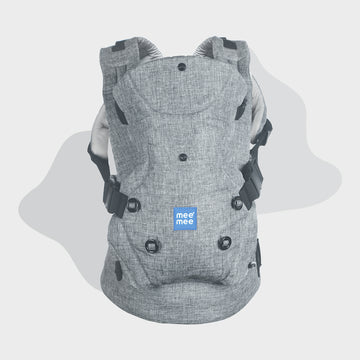
Mee Mee's range is designed to work from the newborn stage right through the toddler years, generally up to around 15 kg, depending on the model. If you have ever wondered if a baby carrier is safe for newborns, rest assured that it absolutely is, as long as the carrier offers proper head, neck, and hip support for early stages and you follow the right positioning guidance.
How long can a baby stay in a carrier?
+
There is no fixed rule, but you should break up longer carries with rest periods every couple of hours, especially for very young babies.
Does a baby carrier provide enough head and neck support?
+
A well-designed carrier with a padded, foldable headrest and properly fitted seat offers good head and neck support, particularly for younger babies who cannot yet hold their head steady on their own.
Can one baby carrier be used as the baby grows?
+
Carriers built with multiple height and seat settings are designed to adjust as your baby grows. This means that you will have to do one thoughtful purchase instead of two or three over the years.
What features should parents look for in a baby carrier?
+
Padded shoulder straps, a supportive waistbelt, cushioned seating, breathable fabric, and more than one carrying position cover most of what matters. Moreover, ease of adjustment and use is also very important.
How should a baby carrier be cleaned?
+
Most carriers are either machine washable or hand wash only, so it is worth checking the specific care label before the first wash.
How should a baby sit in a carrier for proper support?
+
Your baby's hips and thighs should support the weight of their legs in a natural, seated position, often described as an M-shaped seat, rather than hanging straight down. This seated position is considered gentler on developing hips, and most well-designed carriers including Mee Mee’s are built to encourage it.